
ROAD | RAIL | SEA | AIR
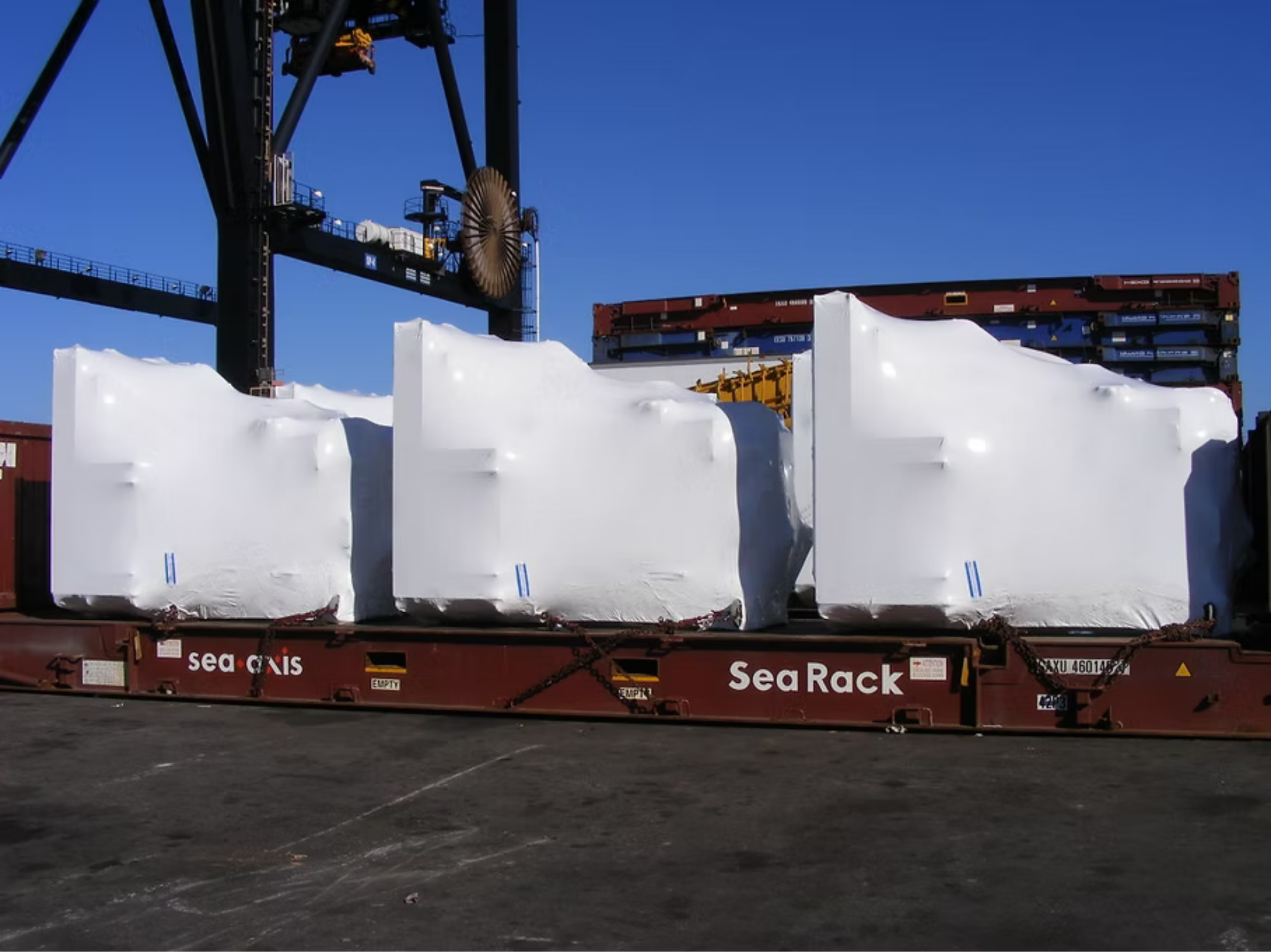
Shrink Wrap Protection for Transportation & Freight
Every shipment has different risks. United Shrink Wrap plans custom systems for train cars, flatbed loads, machinery, freight, and oversized assets traveling across the country or around the world.
Engineered for the Journey, Not Just the Departure
Transport exposes assets to wind, moisture, road debris, salt spray, dust, vibration, handling, and changing weather. The wrap must fit the equipment while working with the rigging, lifting points, securement plan, and transport configuration.
We evaluate where the asset is going, how it will travel, how long it will remain wrapped, and whether access may be required during the journey. That preparation helps reduce chafing, protect surfaces, and maintain the integrity of the enclosure from origin to destination.
Common Applications
Train cars and rail equipment
Flatbed and oversized truck loads
Industrial machinery and generators
Trade show and event equipment
Ocean and export freight preparation
Assets moving between facilities, job sites, customers, or ports
Benefits of Shipping & Freight Shrink Wrap
Custom fit around the shipment and transport method
Planning around rigging, lifting, and securement points
Helps protect against moisture, dust, road debris, salt spray, and UV
Padding and reinforcement at vulnerable areas
Optional access points for inspection when the scope requires them
Nationwide on-site installation
Why United Shrink Wrap
United Shrink Wrap looks beyond the loading point. We plan around the entire journey, including handling, transport speed, environmental exposure, inspections, and destination requirements.
Nationwide Deployment
United Shrink Wrap is based in Michigan and available for commercial projects throughout the United States. Send us the project location, asset information, schedule, and photos so we can evaluate travel and installation requirements.
Start With the Scope
Tell us what needs protection, where it is located, how it will be stored or transported, and when the project must be completed.